5 Things I Learned Walking Into a Karate Dojo at 40
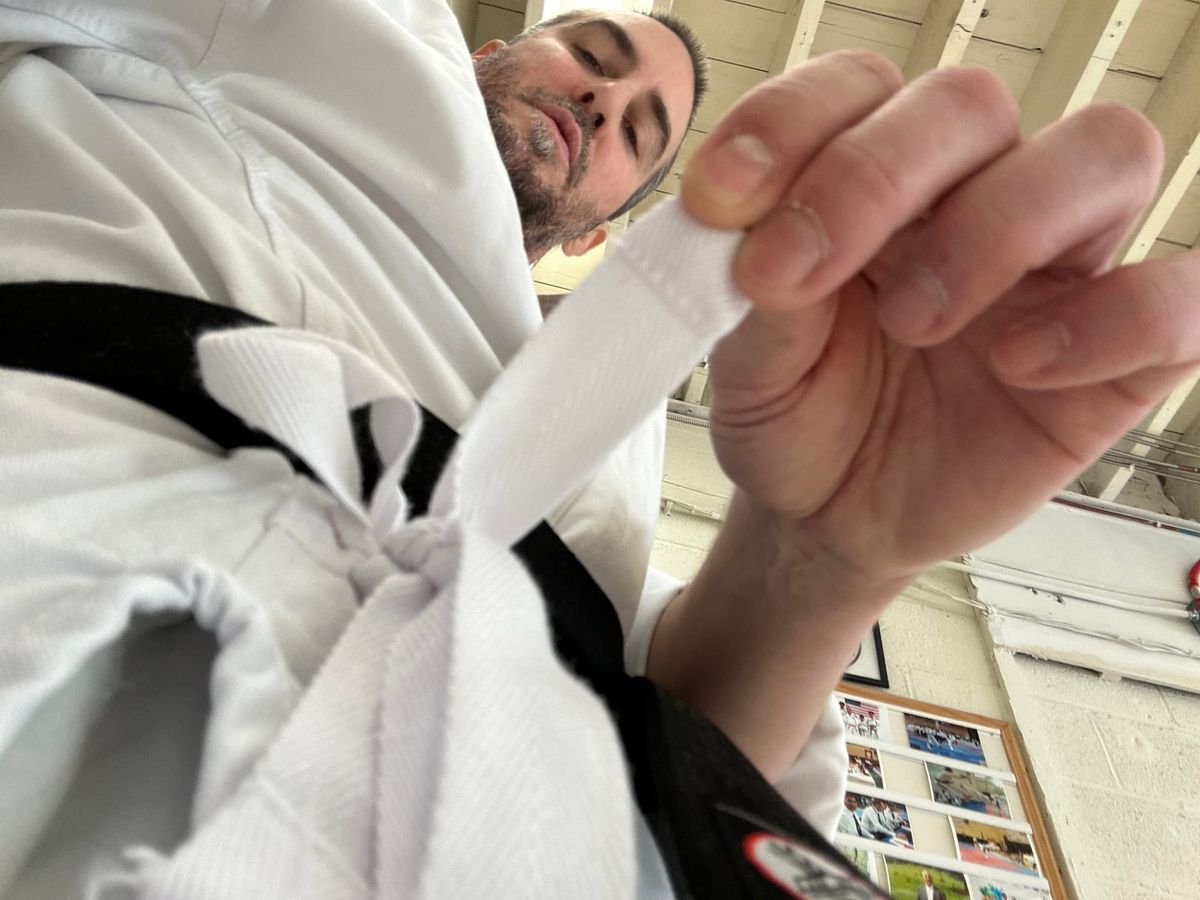
I started karate at 40 (like right after my 40th birthday)
One of the strange things about starting something like martial arts at that age is that you walk through the door as an adult, but in that room, you're a complete beginner.
You don't know where to stand. You don't know what people are talking about half the time. Someone shows you how to move your feet and suddenly walking feels complicated. You spend an entire class trying to get one thing right, go home thinking you've finally got it, come back two days later and realize you don't.
I loved that.
I've been training for about six years now, and somewhere along the way I earned a black belt. I'm proud of that, obviously. But the belt isn't really what changed me.
Training did.
There are lessons I've picked up in the dojo that have followed me out the door and into the rest of my life. These are probably the five biggest ones.
1. Keep the White Belt Mentality
This has become one of the most important ideas in my life.
When you're a white belt, you know you don't know anything. There's actually something freeing about that. You watch. You listen. You ask questions. You screw things up. Somebody corrects you and you try again.
Then you start getting rank.
And that's where I think you have to be careful.
Because there's a temptation to start protecting what you know instead of looking for what you don't know.
Even now, when a brand-new student walks into the dojo, I try to ask myself: What can I learn from this person?
Sometimes it's something technical. Sometimes it's the way they react to a drill. Sometimes they ask a question that makes me realize I've been taking something for granted for years.
That's the white belt mentality.
Stay curious. Keep asking questions. Don't become so attached to being the person who knows that you lose the ability to learn.
I hope I never lose that.
2. Te Before Jitsu
This obviously became important enough to me that I named this whole thing after it.
On the surface, Te Before Jitsu is a martial arts concept. In the simplest terms, sometimes you need to strike before you try to do something more complicated like control, grapple or throw someone.
But I've come to think about it much more broadly than that.
Function over form.
Understand what you're trying to accomplish first.
I've watched myself do techniques that looked pretty good until somebody actually resisted. I've also seen some ugly-looking shit work incredibly well.
That'll change the way you think about things.
We spend a ridiculous amount of time worrying about how things are supposed to look. Martial arts has taught me to ask a different question:
Does it work?
If it works, understand why.
If it doesn't, don't fall in love with it just because you've been doing it that way for a long time.
That's Te Before Jitsu.
And the older I get, the more places I find to apply it.
3. Get Comfortable Being Uncomfortable
There are days when training sucks.
You're tired. Something hurts. You're frustrated. Someone keeps catching you with the same technique. You can't make something work that everybody else seems to understand.
Sometimes you're standing across from somebody who is faster than you, stronger than you or just plain better than you.
Good. Those are the days you need. One of the things martial arts teaches you pretty quickly is that discomfort isn't an emergency.
You can be tired and keep going. You can be frustrated and keep learning. You can be nervous and step onto the floor anyway. You can be afraid and still move forward.
That last one has probably been the biggest lesson for me.
I used to think getting better at something meant eventually you wouldn't be afraid anymore. I don't believe that now.
Fear still shows up. You just get more familiar with it. You recognize what's happening in your body and you learn that you can still make decisions while it's there.
That's a useful thing to know about yourself.
4. Pressure Tells the Truth
I love technique.
I love breaking movements apart and figuring out why something works. I love kata. I love bunkai. I could spend hours screwing around with a single movement trying to find different applications for it.
But eventually somebody has to resist. Because pressure tells the truth.
A technique can feel amazing when your partner knows exactly what you're trying to do and lets you do it.
Now have them resist. Have them move. Have them grab harder. Have them try to stop you.
Suddenly you find all the little places where your technique wasn't quite as good as you thought it was.
That's not failure. That's just more information. Pressure shows you what's actually there.
I've come to appreciate that outside the dojo too. You don't really know how well an idea, a system or even a belief holds up until something pushes against it.
Sometimes it holds. Sometimes it falls apart. Either way, now you know.
5. You're Capable of More Than You Think
This might be the biggest thing karate has given me.
I walked into a dojo at 40 knowing absolutely nothing about karate.
Six years later, I'm a black belt.
And I want to be careful with that sentence because earning a black belt doesn't mean I've mastered karate. If anything, it has made me much more aware of how much there is left to learn.
But I did something that would have been very easy to talk myself out of doing. I simply started and kept showing up.
That's really the secret.
You don't have to completely reinvent your life tomorrow. You don't need some giant burst of motivation. You don't need to know whether you're going to be any good at the thing you're thinking about doing.
You just have to be willing to suck at it for a while. For some reason, that's so much harder when you're older.
We don't like looking stupid anymore. We don't like being beginners. We don't like having somebody half our age show us how to do something.
Do it anyway. Walk through the door. Put on the white belt. Ask the stupid question. Get uncomfortable.
Find out what actually works. Let pressure expose the holes. Then come back and do it again.
Karate taught me that being 40 wasn't too late to start.
Now, at almost 46, I find myself wondering what else I've been telling myself I'm too old to begin?
That's a pretty good question to ask, isn't it?
What would you start today if you stopped worrying about how old you'll be when you finally get good at it?