The Devil's Chair: New England Strange Fiction
Short story fiction about the Devil's Chair in Devil's Hopyard, in the town of East Haddam, CT.

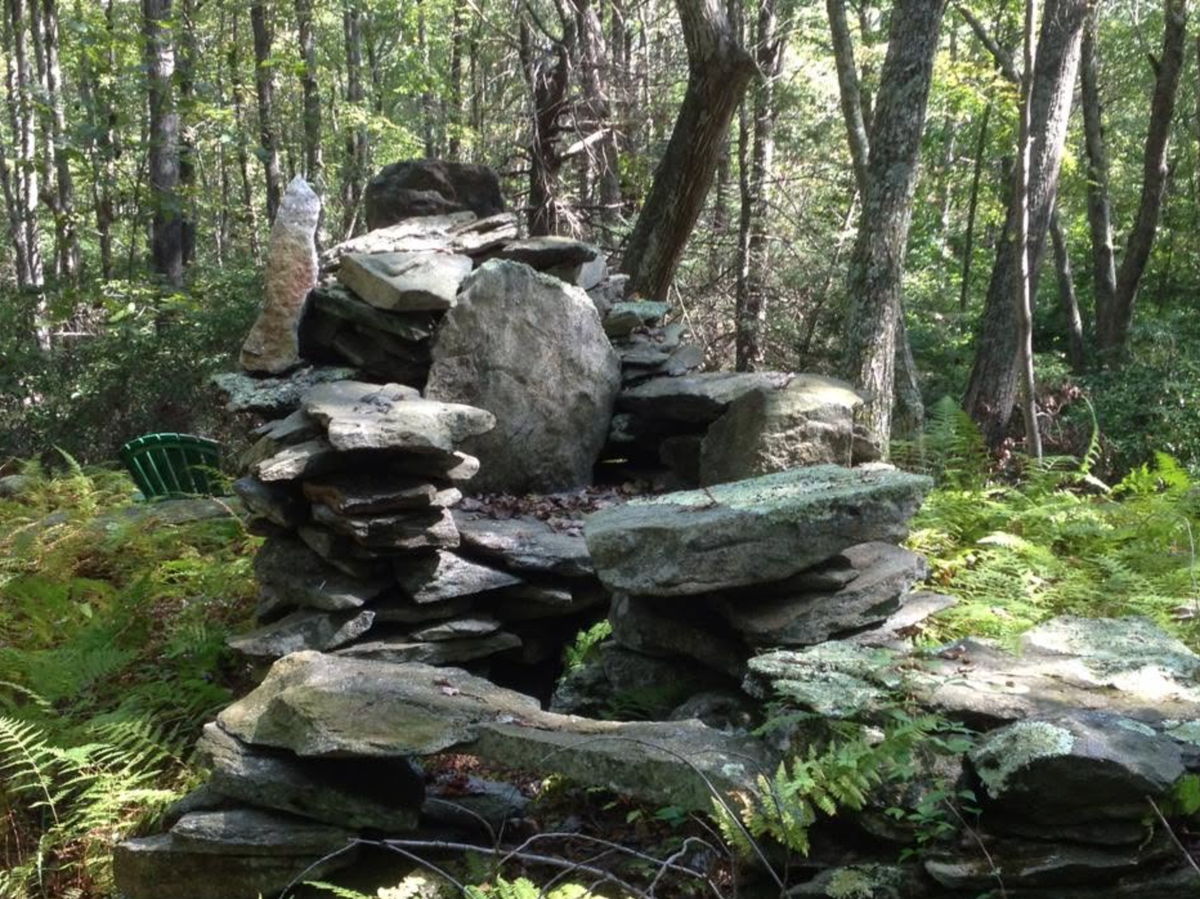
Ranger Cole Pemberton had two stories, and he only ever told you the first one.
The first one he told at the lodge, thumbs hooked in his belt, the brochure rack ticking in the wind. "Folks see the potholes in the rock down at Chapman Falls and they get to wondering. Old story goes the Devil came hopping through one night, caught his tail in the water, danced across the falls so quick his hooves bored those holes into the stone. That's why they call it Devil's Hopyard. He ran off into the woods and that was that." Then he'd grin, and hand you a trail map, and the grin meant we're done here.
The second story he told nobody, because the second story had a rule in it, and the rule was the only thing in nineteen years he had never once gotten wrong.
DON'T SIT IN THE CHAIR.
The chair is real. Most people never find it — it's a half mile off the marked trail, up where the laurel chokes the path and the ground goes soft and the trees lean wrong, all of them tilting the same direction like they're listening to something downhill. It's stone. Tall-backed, two arms, a seat worn smooth. It faces away from the falls, out into the dark of the woods, and Cole had always thought that was the worst part — that whatever sat there liked to sit with its back to the water. Like it didn't need to watch the water. Like the water would come when it was called.
The man arrived on a Thursday in late October. Thru-hiker type — good boots, bad attitude, the kind who reads a warning sign as a dare. Marsh, his license said, when they found it later. He asked Cole where the Devil's Chair was. Cole told him there was no such thing.
Marsh smiled like he knew better and walked off up the trail anyway, and Cole stood at the lodge a long while with a bad feeling spreading in his chest like cold water finding the low places.
He gave it an hour. Then he went after him.
He found Marsh in the chair.
The man was sitting very still, hands flat on the stone arms, and he was looking out into the woods at nothing, and he was smiling — but it wasn't his smile anymore. It was too wide and too patient and it didn't move when Cole came crashing up through the laurel shouting his name.
"Get up," Cole said. "Get up right now."
Marsh turned his head. Just the head, slow, the body still locked in the seat. "It's so quiet here," he said, and his voice came out wrong, like there was river in it. "He let me sit down. He doesn't usually let people sit down."
"That's not a gift." Cole's heart was going like a fist on a door. "Marsh. Listen to me. Whatever it's telling you — about how tired you are, about how good it'd feel to just go down to the water and let it — that's not your thought. That's his. You stand up out of that chair and you walk to me and you do not look at the falls."
Behind them, downhill, through the trees, Cole could hear Chapman Falls coming down. It had never sounded like that before. It sounded like something swallowing.
Marsh's smile trembled. For one second — one second — it was just a scared man's face underneath. "I can't feel my legs," he whispered. "Ranger. I can't feel my legs."
This was the part Cole had never told anyone, the part of the second story he kept for himself: that he had stood in this exact clearing four times in nineteen years. That the chair did not let everyone go. That twice he had walked back down the trail alone, and had written trail accident in the log, and had not slept right since, and had learned to tell the first story louder so the second one would stay buried.
He knew the trick of it now. The chair holds you. The water calls you. And the only thing — the only thing — that ever broke the pull was if someone wanted you out of that seat more than the water wanted you in it.
Cole grabbed Marsh by the wrists. The stone was warm. Warm as a thing just vacated, warm as a body, and the smooth-worn seat fit the man like it had been carved for him, like it had been carved for everyone, like it was still being carved.
"You don't get him," Cole said — to the chair, to the woods, to the swallowing sound downhill. "Not this one."
And he pulled.
It was like pulling a man out of wet clay. Marsh screamed — a real scream, his own voice finally, the river drowned out of it — and the woods leaned, all those wrong-tilted trees groaning toward the water, and for one endless moment Cole felt the seat reach for him, felt how easy it would be, how tired he was, nineteen years tired, how warm the stone was and how cold the rest of his life had been —
Then Marsh came free, and the two of them went down hard in the laurel, and the falls behind them went quiet. Just water again. Just an ordinary river running down ordinary rock.
Cole hauled the man up by his collar and shoved him stumbling down the trail. "Don't stop," he said. "Don't look back. You drive out of this park tonight and you never tell a living soul where you almost sat down."
Marsh ran. Cole watched the yellow of his pack until the laurel took it, and then there was nothing but the woods and the chair and him.
He should have followed. He knew he should have followed.
But he was so tired.
And the stone was still warm.
The new ranger started in spring. Eager, young, asked too many questions. On her first morning she found the old logbook and read it cover to cover, and at the bottom of the last page, in handwriting that got shakier toward the end, she found a single line that wasn't a trail report at all:
Don't sit in the chair. It's mine now. Tell them the first story. — C.P.
She didn't know what it meant. She figured it was a joke.
That afternoon a family came in asking about the holes in the rock at the falls, and she hooked her thumbs in her belt the way she'd seen done, and she grinned, and she told them the first story — the one about the Devil running off into the woods, the one that ends with and that was that.
She told it really well.
She had no idea why, when she got to the part about the woods, she felt the sudden, warm, patient urge to walk up the trail and find a place to sit down.


