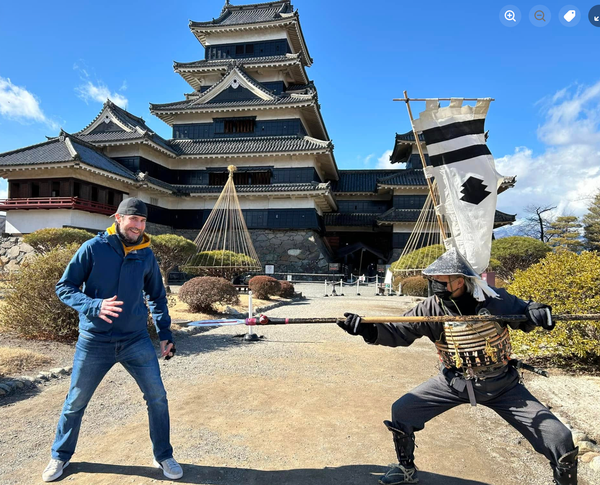
What Color Are You?
Understanding Awareness Before Self-Defense.

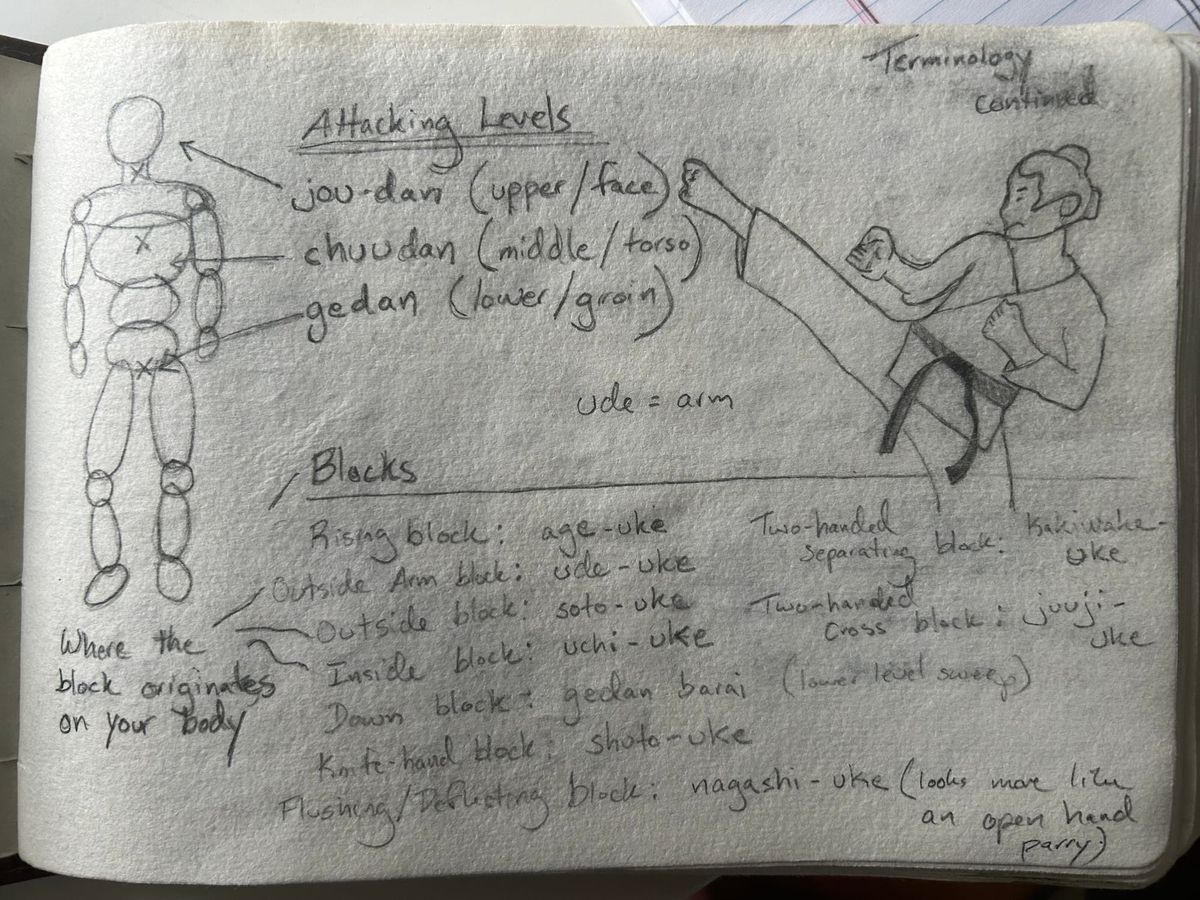
I was going through one of my old karate notebooks the other day.
I've kept notebooks for years where I write down things I've learned in training. Sometimes it's a technique. Sometimes it's something somebody said. Sometimes it's a concept that didn't make much sense when I first heard it, but started making a hell of a lot more sense after I'd been training for a while.
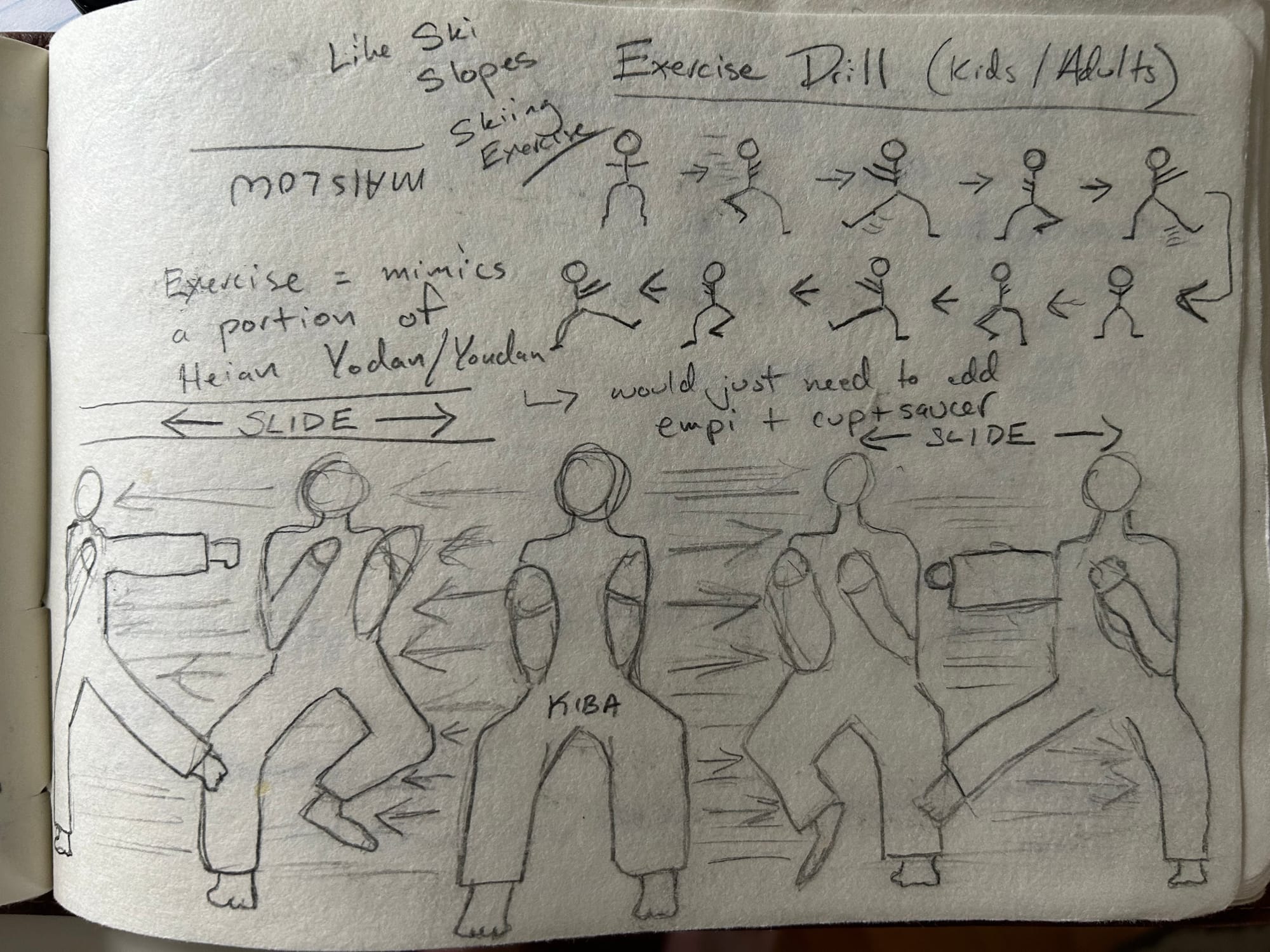
And sometimes I just draw stick figures:
Color coding for safety
One of those things I wrote down and consistently come back to is the concept of awareness. In martial arts, a good instructor will tell you that all self defense starts with situational awareness. You can assign whatever colors you'd like to the different "levels of awareness." The concept is pretty simple, here are mine:
White — You are somewhere you can reasonably let your guard down. Your house. Your bedroom. Somewhere you feel completely safe.
Yellow — You're out in the world. You're relaxed, but you're paying attention.
Orange — Something has your attention. Maybe it's a person. Maybe it's a situation. Something doesn't feel right and you're actively watching it.
Red — The situation has become a threat. You're dealing with aggression, violence, or something that could very quickly become violent.
That's useful.
But looking back through my notes, I realized there's a whole bunch of stuff you need to understand before the colors really mean anything.
Because awareness isn't just about recognizing what somebody else is doing. You also have to understand yourself.
Know Yourself
This might be the most uncomfortable part of self-defense.
What are you actually capable of? And I don't mean 'physically' although that's a part of it. Could you hit somebody in the face? Could you keep hitting them if the first punch didn't stop them?
Could you hurt someone BADLY if you had to?
Could you stay relatively functional while somebody was screaming at you, threatening you or trying to hurt you?
Could you recognize when your ego was making a decision for you?
Those are very different questions from, 'Can you throw a good punch?"
Training gives us opportunities to find some of those answers in a controlled environment. You get grabbed. You get hit. You get put under pressure. You screw things up. Your heart rate jumps. Your brain starts working differently. You start learning where your limits actually are.
And that's extremely important information.
Know Your Weapon
Your weapon doesn't necessarily mean a gun or a knife (sometimes, it might).
Your body is FULL of weapons. Hands. Elbows. Knees. Feet. Head. And my favorite weapon — my forearms.
But knowing that you can use something doesn't mean you should.
If somebody is drunk and getting too close to me, do I need to punch him in the face? Probably not.
Maybe I put my hands up, create some space and move away while verbally trying to de-escalate the drunk person from getting closer.
If somebody grabs my shirt, does that require the same response as somebody swinging a tire iron at my head? Probably not.
Knowing your weapons also means understanding what they're capable of doing. There's a big difference between pushing someone away, striking them to create an opportunity to escape, and hitting somebody with the intention of causing serious damage.
Part of training is developing those tools. Another part is learning when they're appropriate.
Know Your Environment
This one gets overlooked because constantly. Oftentimes, people will train in the same exact spot — a dojo. And that environment doesn't change. But remember, you're not getting into real altercations at the dojo.
So, where are you? Right now? Look around. Because where you are can change what you do.
A technique that works beautifully on the mats might be a terrible idea in a stairwell. Going to the ground might make sense in one situation and be disastrous in another.
Maybe you're on a moving bus. Maybe you're standing on ice. Maybe there are tables and chairs everywhere. Maybe you're in a parking lot. Maybe you're in a bathroom with nowhere to move.
Maybe, just maybe, the guy in front of you isn't the real problem because his two friends are standing ten feet behind you.
Your environment is a part of the fight whether you want it to be or not. Doors. Walls. Cars. Curbs. Furniture. Other people. Escape routes.
ALL OF IT MATTERS.
Which means awareness isn't just watching the person you're worried about. It's seeing the whole damn picture.
Understand Your Levels of Defense
This was another thing I had written down in my notebook: What level of defense does this situation actually require?
Sidenote: If want to be justified in self-defense, you need to be able to prove intent, means, and opportunity (and for half the U.S. states that don't have a "stand your ground" law), you also have to prove preclusion — meaning you tried to remove yourself from the situation and the attacker or assailant would not let you leave. Remember, the definition of self defense:
Self-defense in law is the right to use reasonable or proportional physical force to protect yourself from an imminent threat of unlawful harm or injury.
Sometimes the answer is armor. Protect yourself. Cover up. Absorb what's happening without escalating it.
Sometimes you block or intercept. Use a technique.
Sometimes you simply move. Sometimes you talk.
Sometimes you apologize even when you don't think you did anything wrong because getting home safely matters more than winning an argument with some asshole in a parking lot.
Sometimes you leave.
And sometimes, when those options disappear and the threat is real, you strike.
The biggest mistake is thinking every problem requires the same answer. It doesn't.
The best defensive option might be moving three feet to your left. It might be putting a table between you and somebody else. It might be saying "My mistake, man," and walking away. It might be running.
And yes, sometimes it might mean hurting somebody before they can hurt you.
You need enough tools available that violence isn't your only answer.
Then the Colors Start to Mean Something
Once you start thinking about all of this, the color code system becomes much more useful.
Yellow isn't walking around terrified of everybody you see. It's knowing where you are. Who's around you. Where the exits are. What your options are.
Orange means something has changed.
Now you're paying attention to a specific person or situation. You're creating distance. You're looking for exits. You're thinking about what level of defense might be necessary if this continues.
And red means you've crossed a threshold where action may be necessary.
The colors aren't about living your life paranoid. They're about noticing when circumstances change and adjusting with them.
That's one of the things karate has slowly changed about the way I move through the world.
I'm probably more aware of potential violence than I was before I started training.
But strangely, I'm also less interested in fighting anybody.
Because the more you understand violence, the more options you start seeing before violence ever becomes necessary.
And that's most likely the point.